
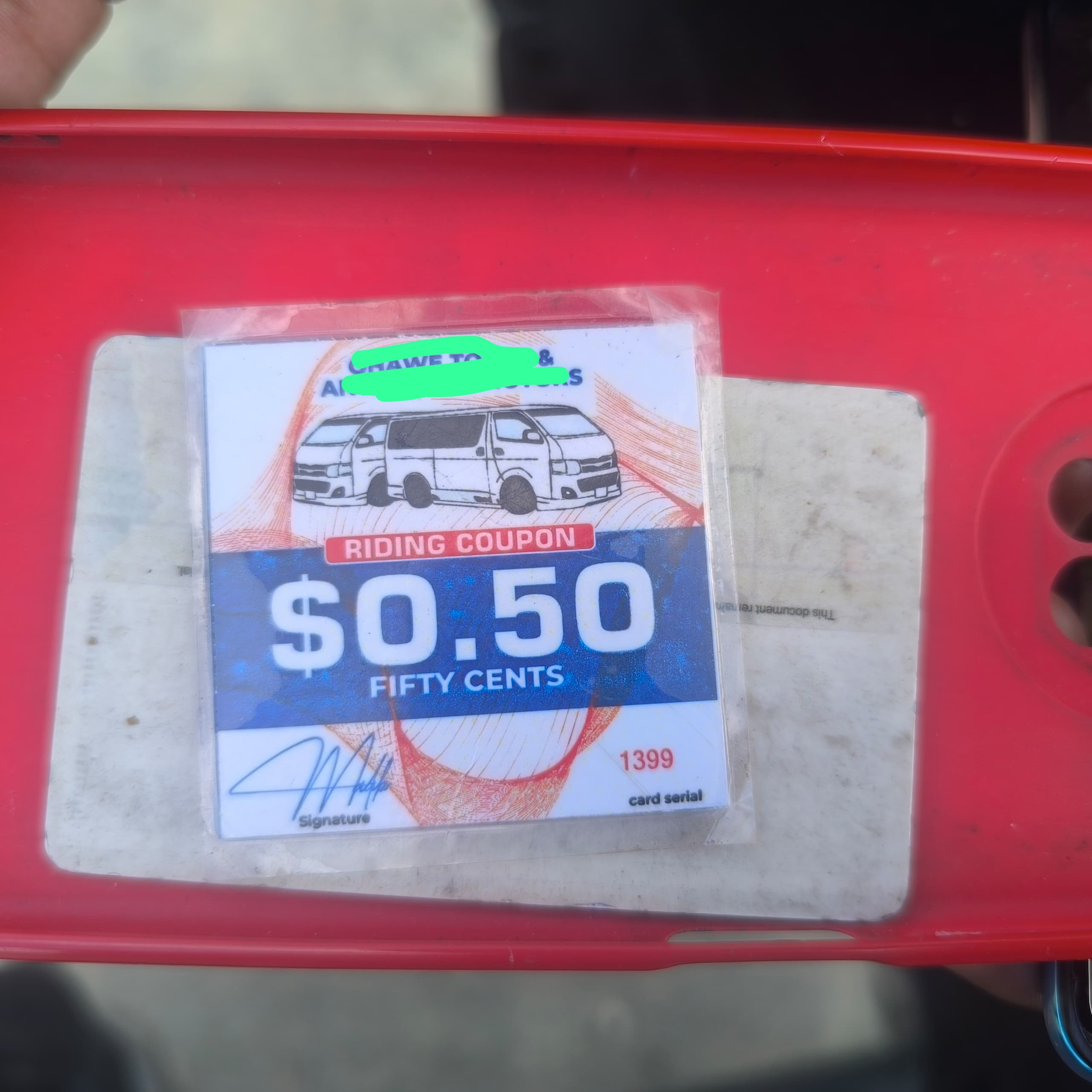
HWANGE — Walk onto any commuter omnibus (kombi) terminal in the mining town of Hwange, hand the conductor a United States Dollar (USD) note for a short trip, and you will not receive a crisp banknote or shiny coins in return. Instead, you are likely to be handed a small, laminated slip of paper or a stamped plastic card.
Welcome to Hwange’s thriving, entirely unauthorized parallel currency market—born not out of a desire to break the law, but out of sheer survival.In this Matabeleland North urban center, a perfect storm of monetary scarcity has forced local transport operators into the role of central bankers. The South African Rand, which historically cushioned small-scale transactions in the region, has completely ceased to function in the local transport network.
Concurrently, physical notes and coins of the nation’s gold-backed currency, the Zimbabwe Gold (ZiG), are virtually non-existent in the day-to-day informal market. Faced with an absolute deficit of small change, transport operators took matters into their own hands: they created their own tokens.
A Contagion of Survival: Borrowed from the Big CitiesWhile the token system feels like a sudden shock to Hwange, local operators did not invent this blueprint. They copied it. This makeshift monetary system is an imported survival mechanism, directly adopted from larger metropolitan hubs like Harare, Bulawayo, and Gweru. For years, commuters in the capital and the City of Kings have navigated the “change crisis” using plastic tokens, branded cardboard chits, and handwritten receipts issued by major transport associations.
As economic pressures squeezed smaller towns, Hwange’s operators simply looked to their counterparts in Gweru and Bulawayo, realizing that if a private token could hold value on the bustling streets of Harare, it could do the exact same thing in a mining town. What began as a desperate metropolitan fix has now officially metastasized into a nationwide regional norm.
Today, these Hwange kombi tokens are no longer just for transport. A resident can take a token given by a driver and use it at a local market stall to buy a bundle of vegetables, hand it to a street vendor for an ice cream, or trade it with an informal trader for mobile airtime.On a micro-level, the convenience is undeniable. It keeps the town moving. But on an economic scale, Hwange is playing a highly volatile game of financial musical chairs.
The Economic Scale: Convenience vs. Macro ChaosFrom a consumer standpoint, the tokens provide immediate relief. They eliminate the age-old Zimbabwean frustration of being forced to buy unwanted candy, pens, or juice boxes at checkout counters just to settle a transaction balance. The system creates liquidity where the formal banking sector has failed to provide it, greasing the wheels of local commerce.However, from an economic perspective, this is a textbook example of “fractional-reserve” private currency issuance, operating completely outside the regulatory purview of the Reserve Bank of Zimbabwe (RBZ).
When a kombi operator issues a 50-cent token, they are essentially taking an interest-free loan from the citizen. They hold the real value (the USD) while the citizen holds a promise printed on a scrap of plastic. If dozens of operators are printing thousands of these tokens, they are artificially expanding the local money supply. Because these tokens are unbacked by any physical asset, gold, or stable economic reserve, they possess value only because the close-knit community of Hwange collectively agrees they have value.
The Looming Crash: Who Holds the Bag When the Music Stops?The ultimate risk of any private fiat currency is a total lack of consumer protection. What guarantees do Hwange residents have that they won’t wake up one morning holding a pocketful of worthless laminated cards?
The short answer is: None.
Unlike formal bank deposits, these tokens have no deposit insurance. If a major transport cooperative goes bankrupt, decides to change routes, or is abruptly shut down by law enforcement or the Ministry of Transport, their tokens instantly revert to what they physically are—worthless scraps of paper.
Furthermore, history has shown that informal systems are highly prone to sudden collapse. A rumor that police are arresting anyone holding the tokens, or a sudden influx of counterfeit printed cards by rogue actors, could cause an immediate “bank run.” Vendors will suddenly refuse to accept them, kombi drivers will deny their own tokens, and the poorest members of the Hwange community—the commuters and vegetable vendors—will be left holding the financial bag.
Regulators on High AlertThis hyper-local phenomenon directly connects to the broader warnings issued by government ministers regarding network and service providers creating alternative currencies. Whether it is a multi-million dollar telecom giant launching a digital ecosystem or a local transport union in Hwange issuing cardboard tokens, the underlying threat to state authority is identical.
While the convenience of Hwange’s token economy keeps the town’s immediate informal market afloat, it serves as a stark, flashing warning sign to fiscal authorities. Until physical small-denomination change formally penetrates the outer regions of Matabeleland North, Hwange will continue to run on its own micro-currencies—leaving its citizens to balance daily convenience against the looming threat of an inevitable economic correction.