
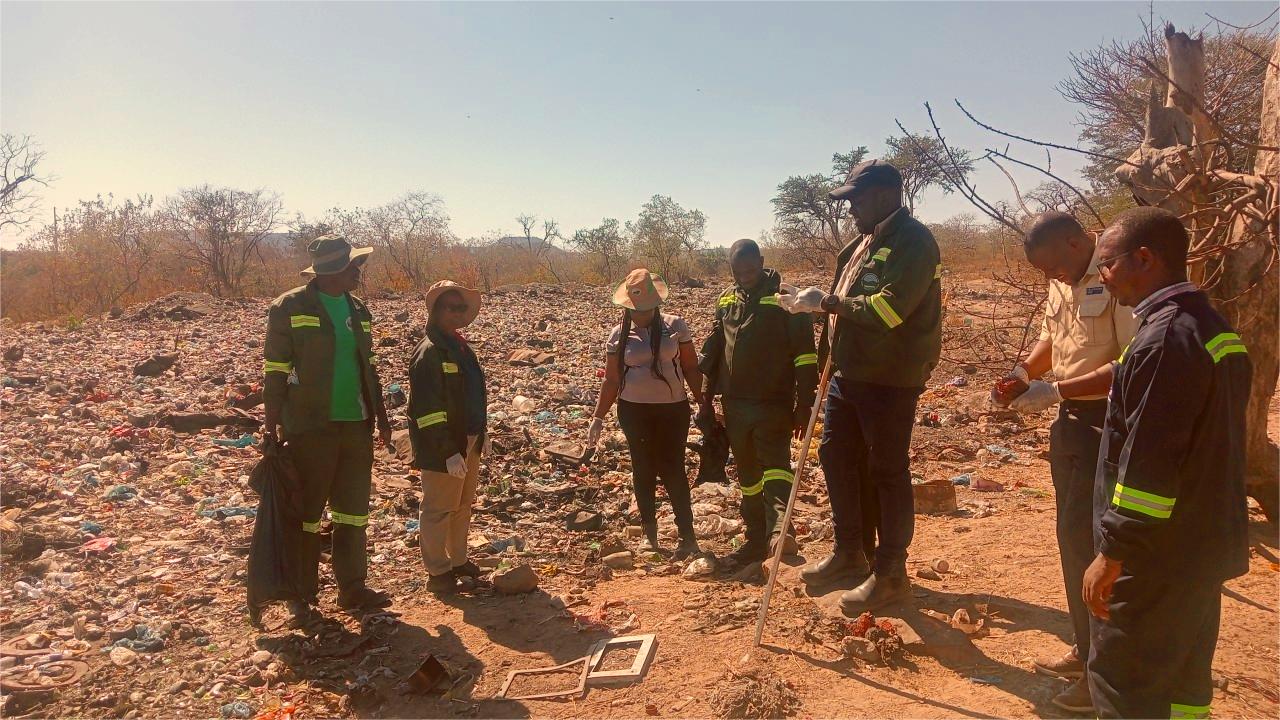
The government through the Ministry of Environment, Climate and Wildlife and the Environmental Management Agency has joined four other African countries in an ambitious five-year regional effort to combat the scourge of Persistent Organic Pollutants (POPs) in plastics.
Story by: Rutendo Mapfumo https://www.linkedin.com/in/rutendo-mapfumo-98426386/
The move has been hailed by scientists and environmentalists as a significant step toward safeguarding public health and the environment.
The initiative, titled “Circular and Persistent Organic Pollutants-Free Plastics in Africa,” seeks to reduce the negative impact of harmful chemicals commonly found in plastic products—compounds that are sometimes intentionally added during manufacturing to increase durability, or enter the region through imported goods.
Professor Farai Mapanda, National Technical Coordinator in the Environmental Management Agency, said the project is meant to curb the impact of chemicals found in plastics.
“Basically, the project aims to reduce the negative impact of the chemical compounds that can be found mostly in our plastics. Some of the plastics and imported products already contain these persistent organic pollutants. The project largely aims to reduce this in the plastics going into recycling or being used in new products, “he explained.
The project, which also spans South Africa, Nigeria, Uganda, and Kenya, focuses on several critical objectives, which include reviewing and strengthening legal and regulatory frameworks to better control the entry and use of POPs in plastics such as:
Promoting circular economy practices so plastics containing these hazardous substances are removed from recycling streams. Enabling environmentally sound management of plastic waste tainted with POPs to prevent further contamination. Facilitating knowledge management, capacity building, and awareness programs, particularly for recyclers and community stakeholders.
Professor Mapanda emphasised the health dangers posed by these chemicals in plastics.
“These pollutants can be released when plastics are burned at dumpsites, and the resulting fumes contain what we call unintentional organic pollutants, which are actually known to cause cancer. Apart from cancer, persistent organic pollutants can cause sterility in humans and stunted growth in children.”
As part of the initiative, EMA teams are characterising waste streams across Zimbabwe’s 10 provinces, focusing especially on plastics used in the building and construction sector between May and July. Preliminary studies have already detected POPs in products from these fields, underscoring the urgency of the intervention.
To curb future risks, the project will train recyclers in safe handling and create new economic opportunities, empowering communities to profit from waste without being exposed to hazardous pollutants.
“We want to make sure that recyclers are capacitated to reduce the amount of waste going to dumpsites, but also make sure they are not exposed to this pollutant. The project is aligned to assist communities to make money from waste, while safeguarding their health,” said Professor Mapanda.
Through comprehensive regulatory reforms, targeted awareness campaigns, and cross-border collaboration, Zimbabwe and its partners aim to eliminate POPs from future plastic flows, protecting citizens and the environment while building a more sustainable, circular economy.
The government of Zimbabwe through EMA is working in partnership with the Basel Convention Coordination Centre for the African Region