
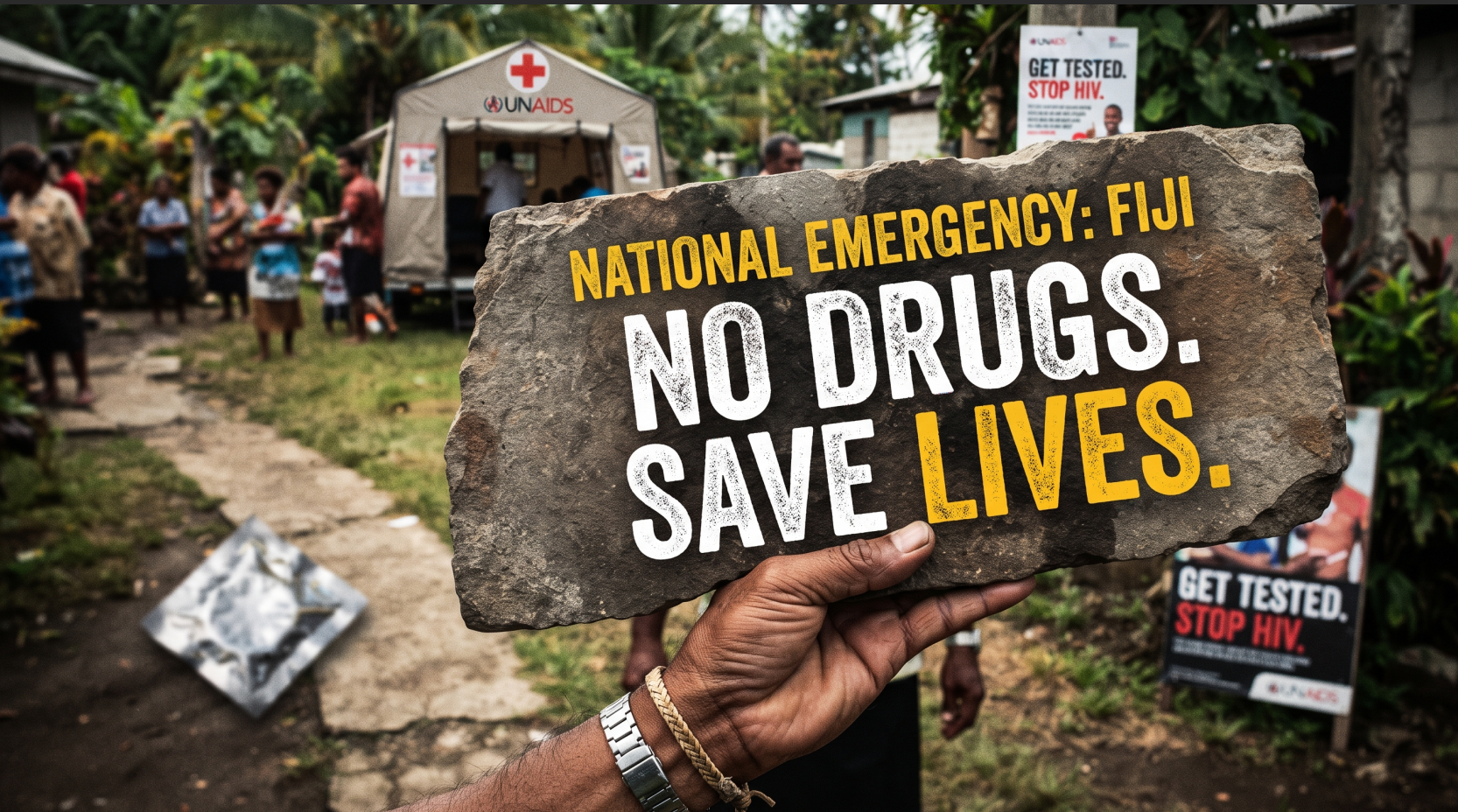
The South Pacific island nation of Fiji is confronting a public health emergency that has stunned global health authorities. Known historically for idyllic landscapes and low baseline rates of infectious disease, the country has become the epicenter of one of the fastest-growing HIV epidemics in the world.
At the heart of this crisis is a sobering reality: Fiji’s outbreak is not happening in a vacuum. It is being driven by a parallel, escalating disaster—a devastating surge in crystal methamphetamine use and high-risk intravenous drug practices. The situation in Fiji serves as a glaring window into a much larger, global crisis, illustrating how the modern drug pandemic is actively reshaping and fueling infectious disease outbreaks worldwide.
Inside Fiji’s Public Health Emergency
Official data released by Fiji’s Ministry of Health alongside UNAIDS paints a stark picture of the escalation. In a nation of under a million people, the estimated prevalence rate has climbed dramatically, with approximately 1 in every 60 adults now estimated to be living with HIV.
This staggering acceleration marks a sharp departure from global downward trends. Furthermore, healthcare systems have struggled to keep pace due to a massive gap in treatment and awareness: estimates indicate that only a fraction of those infected know their status or are actively receiving lifesaving antiretroviral therapy (ART).
The Drivers of Transmission
The primary engine behind this rapid spread is the influx and abuse of crystal methamphetamine. As drug use surged, it brought dangerous cultural and behavioral shifts:
- Intravenous Transmissions: A significant portion of individuals entering treatment trace their infections directly to needle-sharing.
- High-Risk Practices: Dangerous local phenomena, such as “bluetoothing” or “hotspotting”—where blood from an individual high on drugs is drawn and shared among peers—accelerated transmission rates at an unprecedented scale.
- General Population Spillover: What began as a localized issue among vulnerable networks rapidly spilled over into the broader population, resulting in rising transmission rates among young people, families, and antenatal cases involving newborns.
The Multi-Sectoral Response
Recognizing that traditional public health measures are no longer enough, the Fijian government—backed by UNAIDS, the World Health Organization (WHO), and international partners—declared a national emergency.
The response has required breaking through long-standing policy and cultural barriers:
- Harm-Reduction Strategies: Authorities have moved to implement needle and syringe programs (NSPs) and supportive legislative changes to curb shared equipment use.
- Expanding Access: Free rapid testing, decentralized clinics, and scaled-up antiretroviral treatments and Pre-exposure Prophylaxis (PrEP) are being rushed to communities.
- High-Level Coordination: A dedicated Cabinet Sub-Committee and national taskforces are uniting law enforcement, healthcare workers, and religious leaders to shift public narratives from stigma and moral judgment to confidential medical care and human rights.
When Substance Abuse Becomes a Global Pandemic
While Fiji’s struggle is uniquely acute, the underlying mechanism is universal. The convergence of substance abuse and public health vulnerabilities highlights a grim reality: drugs and substance abuse have effectively become a quiet, borderless global pandemic.
Across every continent, synthetic drugs—particularly potent stimulants like methamphetamine and opioids like fentanyl—are tearing through communities. The impact of this global drug crisis extends far beyond addiction and overdose:
- The Catalyst for Infectious Disease: Substance abuse acts as a force multiplier for epidemics. Whether through shared needles driving blood-borne viruses like HIV and Hepatitis C, or lowered inhibitions leading to unprotected exposure, addiction routinely paves the way for public health emergencies.
- Overburdening Healthcare Infrastructures: Health systems from developing nations to major metropolitan centers are being stretched to their breaking points, forced to simultaneously manage addiction treatment, mental health crises, and the secondary infectious diseases left in their wake.
- Breaking Social Fabrics: The global drug pandemic dismantles families, destabilizes local economies, and preys heavily on marginalized or economically vulnerable populations who lack access to adequate harm-reduction and medical infrastructure.
Fiji’s national emergency is a critical warning for the international community. It demonstrates how swiftly a localized substance abuse crisis can mutate into a full-scale humanitarian and epidemiological emergency.
Tackling this challenge—both in Fiji and across the globe—requires moving past punitive measures alone. It demands a unified, compassionate approach that treats addiction not merely as a criminal justice issue, but as a severe medical and public health crisis. Until governments worldwide treat the spread of dangerous substances and their health consequences with the urgency of a global pandemic, stories like Fiji’s will only continue to multiply.