
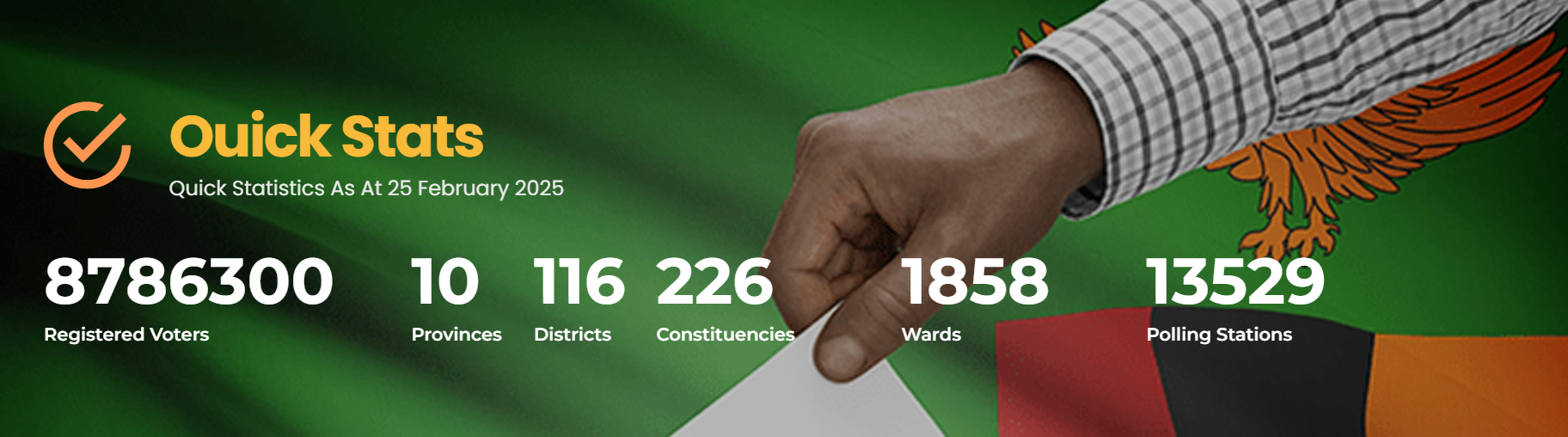
LUSAKA, ZAMBIA — In a national election that drew intense domestic and international scrutiny, Zambia’s incumbent President Hakainde Hichilema has secured a second five-year term. Official results declared by the Electoral Commission of Zambia (ECZ) confirmed that Hichilema, representing the United Party for National Development (UPND), secured approximately 60% of the vote, crossing the absolute majority threshold required to avoid a second-round runoff. However, the path to victory was marked by a tense counting pause, opposition allegations of voting irregularities, and targeted security operations, leaving a polarized electorate in its wake.
Key Election Results Summary
| Candidate | Party / Affiliation | Vote Share (%) | Status |
| Hakainde Hichilema | United Party for National Development (UPND) | 60% | Declared Winner |
| Brian Mundubile | Patriotic Front (PF) | 38% | Main Challenger |
| Other Candidates (12) | Various Independent & Minor Parties | 2% | Trailed |
Key Electoral Controversies and Events
- Vote Counting Pause: Following polling, the ECZ temporarily halted central vote counting over the weekend, citing security threats, attacks on electoral staff, and the theft of marked ballots. Tallying resumed once police contained the situation.
- Opposition Fraud Claims: Patriotic Front challenger Brian Mundubile claimed victory early in the tallying process, alleging widespread voting irregularities, though formal evidence was not immediately presented.
- Opposition Arrests: On election night, Zambian security forces arrested several leading opposition figures, citing threats to state security and public order.
- Observer Reactions: Joint observer missions from the European Union (EU) and the Southern African Development Community (SADC) expressed concern over the pause in counting. The EU mission highlighted that while the election was competitive, it took place against a backdrop of a “constrained democratic space.”
Sentiments of the Opposing Zambian Population
Among supporters of the Patriotic Front and civil society critics, the election outcome has fueled three primary grievances:
- Skepticism over Electoral Integrity: The temporary suspension of vote counting severely undermined trust among opposition supporters, who view the pause as an opportunity for tallying manipulation.
- Fears of Decreasing Political Freedom: Pre-election legal adjustments, uneven media access, and night-of-election arrests have heightened concerns that Zambia’s democratic institutions are weakening.
- Grassroots Economic Disconnect: Despite macroeconomic stabilization, a significant segment of the population continues to struggle with high living costs, youth unemployment, and drought-induced power cuts, creating frustration that top-line economic reforms have not reached daily life.
Broader Implications for Zimbabwe and Africa
Implications for the Rest of Africa
- Validation of Sovereign Debt Restructuring: As the first African country to test the G20 Common Framework for debt treatment during the pandemic, Hichilema’s victory signals political continuity to foreign investors, multilateral lenders (IMF, World Bank), and sovereign creditors.
- Regional Democratic Precedent: The election reaffirms the centrality of electoral transitions in Southern Africa, though observer reports on political restrictions will keep debates on regional election standards active.
Overall Performance of the Zambian Economy
When Hichilema took office in 2021, Zambia was burdened by severe debt default and hyper-inflation. His first-term economic performance presents a mix of structural reform and external challenges:
- Debt Restructuring Success: Negotiated major restructuring agreements with bilateral and private creditors under the G20 Framework, significantly restoring investor confidence.
- Monetary Policy Stabilization: Successfully reined in runaway inflation and brought stability to the Zambian Kwacha relative to pre-2021 levels.
- Strategic Mining Growth: Leveraged Zambia’s status as Africa’s second-largest copper producer by revising mining tax codes to attract foreign direct investment (FDI) aimed at critical energy-transition minerals.
- Climate & Energy Vulnerabilities: Severe regional droughts heavily impacted hydroelectric power generation and rural agricultural yields, creating lingering cost-of-living pressures for ordinary households.