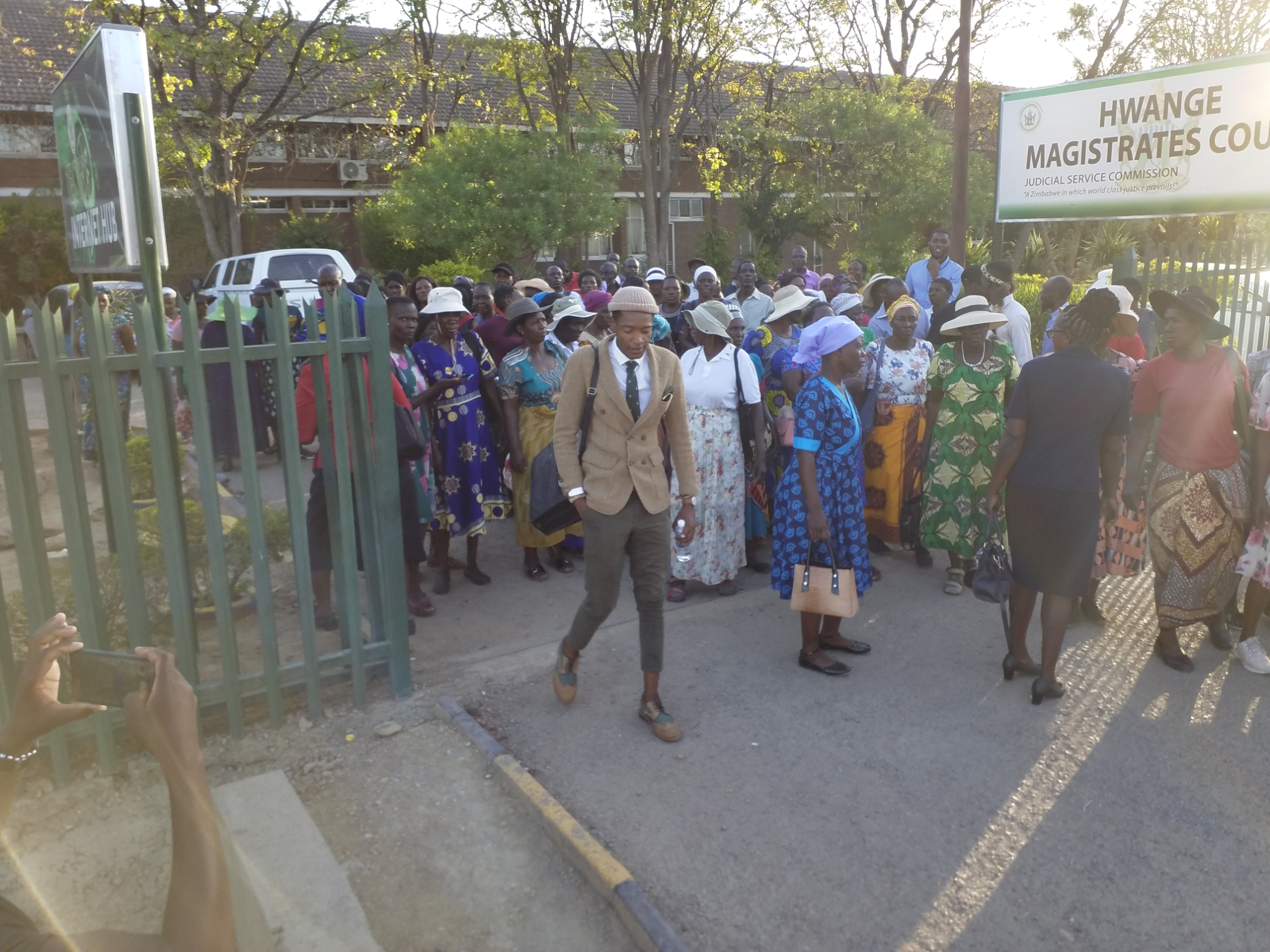
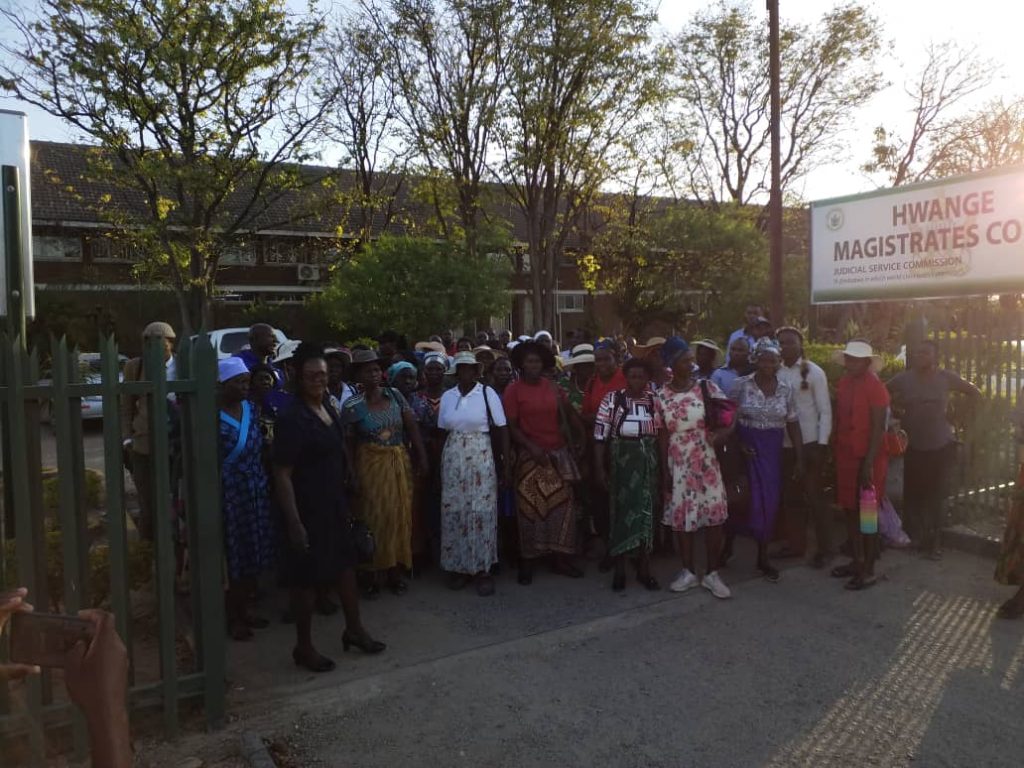
On Wednesday morning the 1st of October 2025, a water rights conflict erupted in Diki Village, Hwange Rural District Council, Matebeleland North, Zimbabwe culminating in the arrest of 5 villagers who were charged with obstructing a chinese company called ZhongJin Heli Energy from connecting a company built pipeline to a community built dam (Kalope Dam).
The conflict between the residents of Diki Village ward 20 Hwange Rural District Council and ZhongJin Heli Energy has run for over 3 months with residents bemoaning how the chinese company have laid a water pipeline that will siphon 300 megalitres of water from the community built Dam without conducting any consultations with the community.
Conversations with the Chairman of the Lukosi Irrigation Farmers Association Mr C Ncube and a handful of residents indicated that the conflict over Kalope Dam water dates back as far as 8 July 2025 when the community was initially addressed by local traditional Leadership who was escorted by a chinese representative from ZhongJin Heli Energy who came to Diki Village in company of a fellow resident whose name cannot be cited pending an official response from the alleged individual.
Further engagement with Diki village Residents highlight that the engagement that was held on the 8th of July 2025 was more of an update as opposed to it being a community consultation by ZhongJin Heli Energy. Residents allege that through the conveners of the meeting ZhongJin Heli Energy proposed to mitigate potential impacts of its activities on the irrigation scheme farmers by purchasing a fence to refence the irrigation scheme and a Center pivot to help minimize water loss in exchange for drawing 300 megalitres of water from the Dam to support the company’s water needs.
To best conceptualize the water wars this Publication conducted an on the ground probe of the Hwange Rural District Council ward 20 Diki Village Residents. Residents bemoan the inherent challenges associated with switching from a flood watering system to a Center pivot system due to the fact that the current Lukosi irrigation scheme is built to be watered using flood watering technique, which means that should the community adopt the proposal by ZhongJin Heli Energy they forgo reaping any produce in the new year as they would need to redesign the irrigation scheme. Residents further touched on the additional impacts they will be visited by should they switch to using a Center pivot system, with electricity and security costs high on their list concerns. Residents challenged who must meet the costs of securing security personnel to watch over the pivot and the electricity charges associated with using the pivot. Mr C Ncube who serves as the Irrigation Farmers Association Chairperson shared his thoughts on the water crisis,
“Lukosi lrrigation is a flagship of Diki Village, the entire Lukosi Ward 20 and Whange District on food security. The Lukosi irrigation scheme has 73 members whose produce not only meets their domestics needs but the scheme creates downstream value supporting not neighboring communities and schools. Dating back to as far as 2015 Lukosi Irrigation scheme has partaken in national programs supplying both maize and wheat to Whange GMB every year. Just on record last year 2024 the Lukosi lrrigation delivered 68 metric tonnes of winter Wheat to the GMB and remained with excess for domestic consumption. Every year we produce about 12 tonnes of sugar beans on contract for Marist Brothers High School in Dete. Lukosi lrrigation Scheme was conceptualized in 1969 by the villagers after realizing poor field yields from their dryland fields thereafter the community established in 1972 with the pioneer leadership of the then Headmaster Jacob Francis Mudenda. It started of as a small 12 hectares and has since been extended on two occasions to current 42 hectares. The lrrigation scheme is a communal one, first drawing irrigation water by river bed sand centrifugal pump abstraction.
The electric centrifugal pump abstraction system later in the years proved problematic and inefficient. The serrated piping’s would from time to time get chocked with sand. Farmers and the engineering personnel would spend weeks on repairs during those protracted repair periods the crops suffered moisture stress, withered and dried up leading to production loss. Secondly, the electric powered pump engine proved costly on both operations and running costs. The electric bills were exhorbitant to us as farmers. Furthermore ZESA maintenace works and load shedding all adversely impacted the irrigation’s production. Instead of electric pumping we opted for the gravity -flow system which efficetively eroded away electric bills, running and operational costs as well as the disruptive pipe chockings. The monetary and non-monetary costs we faced from relying on electric machinery were effectively MITIGATED by daming Kalope Dam. We are happy with this gravity -flow flooding system to extent that in 2023 we won and came FIRST in the National Irrigations Competitions.”
When asked if the community resistance to the extraction of water from kalope Dam is part of a larger political agenda designed to subvert infrastructural development the residents rebutted the assertion and highlighted that their ire was raised by the company’s construction of a pipeline that draws water from the community built dam without any consultation. Residents highlighted how they have held several meetings over the issue and in every instance the community’s position on the proposal was a resounding No.
In one of the focus group discussions we had with a handful of Ladies at the Irrigation Scheme one of the key points raised by the ladies was, ‘we as Lukosi Irrigation scheme would further like to highlight that ever since way back there a is a block of 8 hactares which we are not irrigating but that block is only tiled over the rainy season due to acute irrigating water shortage which is why the Diki village residents are perturbed when ZINWA says there is ample water to spare…’
The Residents stand firm on fighting for their water rights arguing that the Dam is a community built Dam while the Management at ZhongJin Heli Energy remains firm on their assertion that they have legal right to draw water from the Dam as empowered by the Water authority – Zinwa. At tohe moment the ZhongJin Heli Energy only intends to tap into the water for a 3 month period while work runs on their main pipeline. According to the Residents of Diki Village the crisis over the prospect of Kalope Dam being drained for industry activity has been the main subject of a series of community engagement platforms however none of the platforms have resulted in an agreement.
The straw that broke the camel’s back on the 1st of October 2025 was the connection of the ZhongJin Heli Energy pipeline to Community irrigation scheme through what the company’s lawyer claimed is legal right to draw water from Kalope Dam secured from Zinwa by way of a contract. Thereafter riot police was called on the scene and 5 residents were arrested in melee (4 women & a single gent) 4 ladies namely Linet Zulu, Deficiency Ndlovu, Simangele Singa, Chetani Mathe and a single gentleman Likhwa Nyathi.
The 5 arrested Diki residents were taken to Hwange where 3 of the 5 were assaulted with the two ladies claiming they were assaulted with kicks to the body and while Likwa Nyathi sustained several baton stick strikes to the head. The Gentleman who was arrested with the women questions around meeting their legal Bills linger on. Allegations of misconduct have been aired by the detained victims who claim they were assaulted by a public officer, more details on the matter are set to be shared on the 17th of October 2025 when the Court sits again post an investigation into the matter by the National Prosecution Authority.
The arrested villagers subsequently spent the night in Police custody and taken to Court on Friday the 3rd of October 2025, were they represented by Advocate Nkala of Nkala and company. The National Prosecuting Authority initially pressed to have the detained villagers denied bail however the proposal changed to each paying US$200 bail with additional conditions demanding no interaction with state witnesses while subject to reporting to the Hwange ZRP Station every 5 days and staying away from the Dam. Advocate Nkala challenged the NPA’s call for a blanket ban of the residents from the dam highlighting how significant a role it plays to their livelihoods. Advocate Nkala successfully managed to secure all 5 villagers bail at a US$100 each attached to conditions that every fortnight they report to the police station to present themselves, the advocate further secured the villagers rights to continue accessing the Dam on the promise to not tamper with the chinese company equipment and not intimidate nor interact with state witnesses.
In a follow up feedback conversations we captured these heartfelt words from Mr T Singa whose Spouse was one of the 5 residents who were arrested for protesting against the extraction of water from Kalope Dam,
`As the husband of one of the arrested women, I’m deeply disturbed by the actions of the mining company and the response of the authorities. My wife and the other community members are fighting for their right to water, a basic necessity for their families and livelihoods. Their arrest is a clear infringement on their freedom of expression and peaceful assembly. I’m worried about my wife’s safety and well-being, and I demand that the authorities take immediate action to protect her and the other community members. I urge the authorities to drop the charges and engage with the community to find a solution that prioritizes the well-being of the people over corporate interests. The community deserves transparency, accountability, and justice.’
The Diki Village water woes serve as proof of a larger Land Tenure conflict within our resource endowed communities, the upscaling of industrial investment in resource endowed communities is not without its challenges, when investment contracts are negotiated at a national level the welfare of grassroots communities interests are often underserved. The Diki Community struggles against ZhongJin Heli energy highlight the nexus between community water rights and industrial investment. In rural contexts this struggle involves a complex interplay of factors where large-scale projects can lead to both potential benefitz such as infrastructural development visa a vie an increase in significant conflicts over water access and use adversely impacting livelihoods and sustainability. Simply put the power generation targets ZhongJin Heli Energy aims to reach while they present a valuable milestone in our pursuit of electrifying every homestead across bare unforeseen costs on the host communities which include but are not limited to land tenure and water rights.
While Community water rights are often based on customary practices however lessons from the Kalope Dam crisis teach us that due to the changing investment landscape customary community water rights are gradually being challenged by industrial demand, which can lead to over-extraction and the marginalization of local resident’s needs in decision-making. Effective management requires integrated approaches that prioritize local stakeholder involvement, recognize community-based tenure systems and ensure a fair balance between industrial needs and the rights of communities as enshrined in the COBE act and SI 134 of 2019. At the time of the publication of this article no responses had been secured from Zinwa nor ZhongJin Heli Energy on the water woes however Key questions that linger on while ZhongJin Heli Energy takes Diki villagers to court for protesting its extraction of water from a community built dam are what are the Company’s Corporate Social Responsibility goals, is there a strategy to comply with local corporate governance policies and what about community members rights to Free, prior and informed consent.
The Court Case for the arrested 5 villagers who released on Bail is set to be heard on Friday 17 October 2025, there are still unment needs the 5 victims and larger Diki Community need namely extensive Legal representation to ensure a favourable resolution of the water woes, the 5 villagers who were arrested need mental health counselling to overcome the shock of the incident and subsequent torture they endured at the hands of public servants. Furthermore going ahead into the court case of the 5 arrested villagers which was postponed to the 17th of October 2025, the community needs assistance in securing transportation to bus as many villagers to the Hwange Magistrate Court.