By Yolanda | Hwange Chronicles
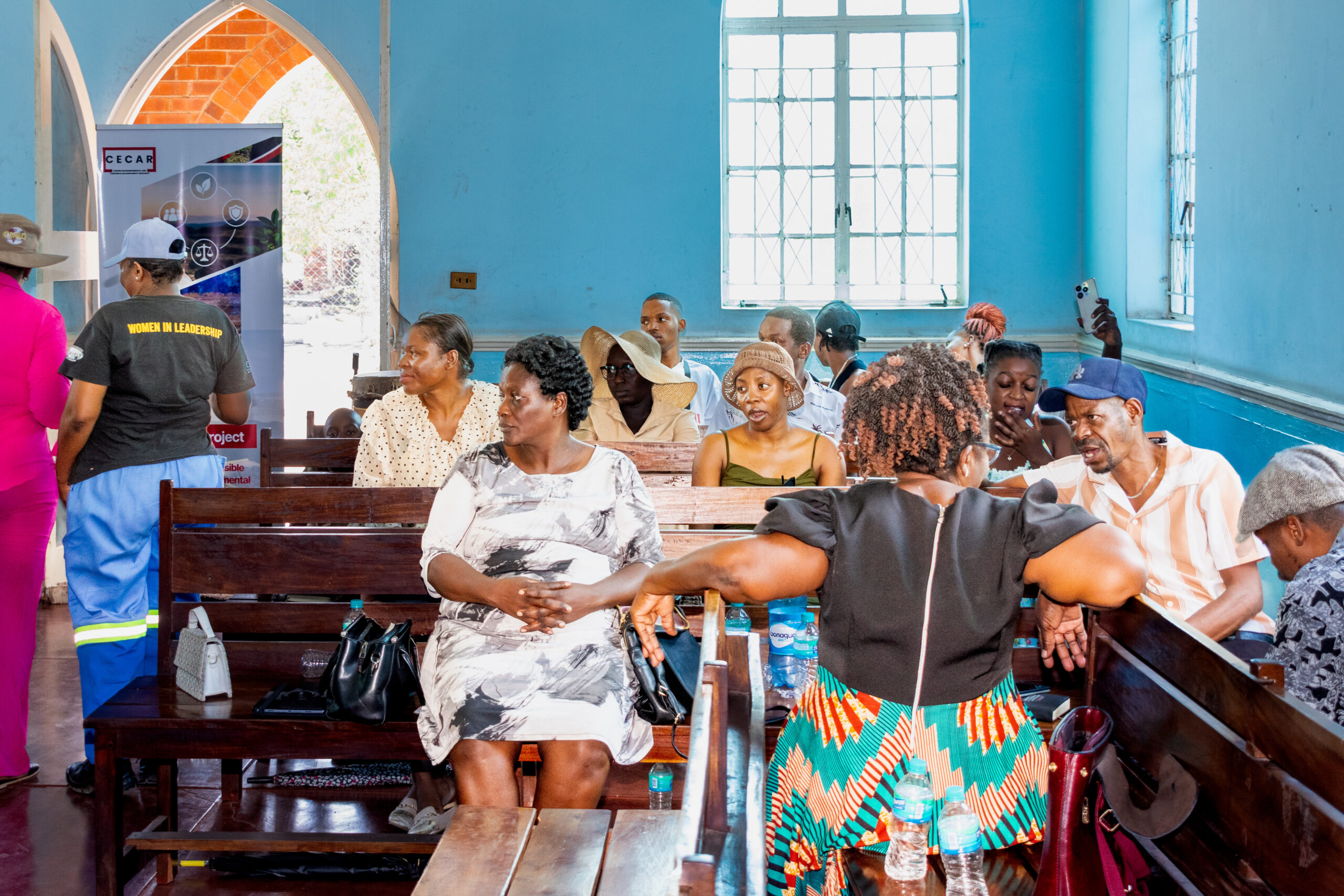
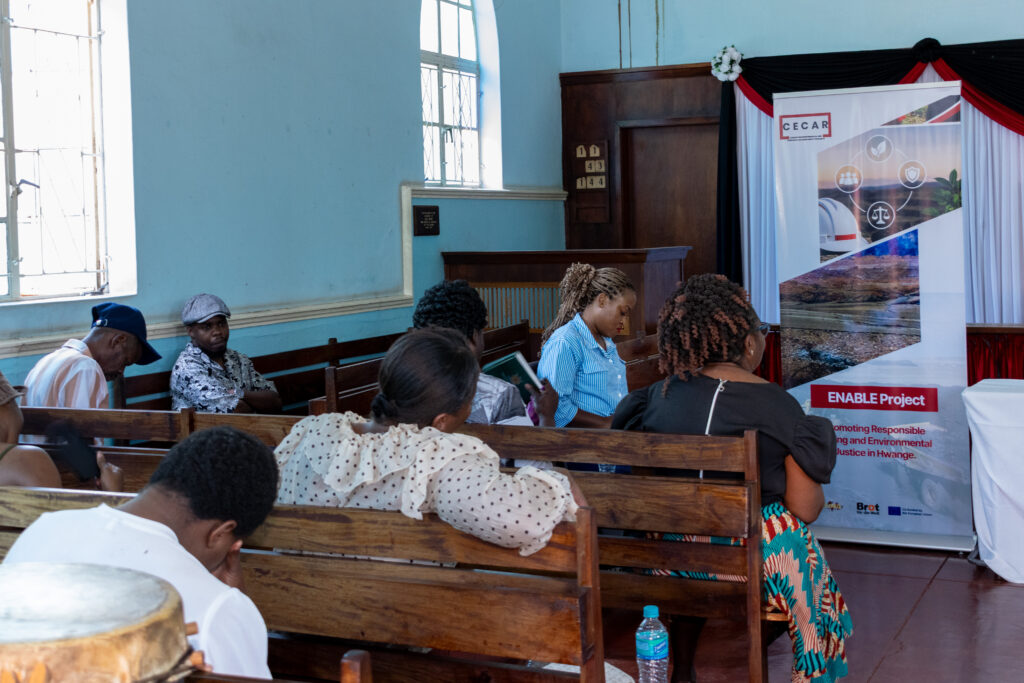
This week during a Social Auditing exercise conducted by the Center for Environmental and Corporate Accountability Research (CECAR) young people in Hwange raised concerns over youth development bottlenecks that include but are not limited to high unemployment rates, the adverse impacts of unmitigated negative externalities, challenges with formalizing their business ventures, access to information, lack of local skills development facilities, rampant drug and substance abuse, prolific water shortages and inadequate waste management which has led to rise of plastic pollution across several wards across the Hwange during a youth engagement project aimed at promoting responsible mining and environmental justice.
The Center for Environmental and Corporate Accountability Research (CECAR) is a youth organization registered with the Zimbabwe Youth Council. CECAR’s mission is to unite youth in protecting human rights, balancing mineral extraction with wildlife conservation, and securing a fair, sustainable future for all.”
The Social Auditing exercise hosted by the Center for Environmental and Corporate Accountability Research (CECAR) was facilitated by the organization’s Research and Learning Director (Tinashe Raphael Matika) and project officer (Annarita Bhingara), the activity created a platform for young people to discuss challenges affecting their communities, share their experiences and afford young people a rare opportunity to cross pollinate ideas on strategies on how to lobby responsible authorities for the resolution of the youths development bottlenecks experienced by youths of Hwange.
Focal discussion points were anchored on how to support duty bearers and development actors in identifying youths development bottlenecks, youth pportunities in Local Authority Strategic plans and NDS2. The Social Auditing exercise was made possible through the support of the European Union through what is known as the ENABLE project which aims to promote youth and community participation throughout development processes. It is envisioned that the data collection exercise would enhance youth ability to identify and facilitate intra-District youth learning from effective Sustainability (ESG) and Corporate social responsibility (CSR) initiatives.
One of the initial concerns raised during the engagement was the dismal levels of Youth participation in Local Authority processes that witnessed as low as four youths participating in last year’s urban local authority budget consultation meetings. It was noted how the continued Dual Administration of Hwange perpetuates the colonial practice of empowering Private Profit making Entities to exclude grassroots communities from participating in development processes.
Further probing revealed that the Dual Administration setup of Hwange casts the Youths of Hwange into passengers of the development processes. national resource governance and local plus national decision-making processes. Seven out of thirty youths confirmed they have attended a Local Authority engagement, a fifth of the youths indicated that their communities are impacted by some form negative externality that include but are not limited to air pollution, heat stress, noise pollution, human wildlife conflict, environmental degradation or water woes.
Key responses from young people on why they are apathetic to Local Authority processes included poor information dissemination that often leaves Youths uninformed sufficiently informed on the dates, inconvenient proposed timeslots of Council Full board engagements plus a lack of understanding of the role youths play in these public development processes. The Youths identified Public Policy understanding gaps as why Youths cannot appreciate the role they must play in civil spaces which is why two out of three of the youths have never attended a Constituency Development Fund, Ward Development Committee feedback engagement, National/Local Budget making exercise and Policy Review exercise when Parliament conducts Bill public consultations.
A sixth of the participants expressed the harrowing tale of how they have for years battled with the challenge of accessing clean, portable and safe water in some parts of Hwange. Residents from the following wards HLB ward 4 (Baobab North), HLB ward 10 (Sinderella), HLB ward 14 (Raylton-Ngumija), HRDC Ward 11 (Kamativi) and HRDC ward 20 face varying forms of water crises. While those in the Hwange concession areas reportedly have to walk almost half a kilometre for some even further just to access water, Residents of the HLB Wards 4, 5 and 6 plus HRDC ward 20 raised concerns over inconsistent water supplies due to a water rationing system that for some is a daily exercise while for some water supplies can be reconnected after two to three days of rationing. For some these water woes are further worsened by concerns over water quality, residents report that in some instances post water supply reconnection the water quality is compromised with some users citing challenges of the water being dirty or murky brown.
The Social Audit dug deep into civil challenges and it unearthed that a tenth of youths rely upon the local community radio station for their news, social media platforms are the favorite information dissemination medium for youths however the dangers of misinformation plus disinformation in addition with the high cost of data limits Youths from being able to harness the full power of the internet. Under quality of life issues the availability of streetlighting (tower lights) was raised as a critical community safety and welfare concern with the absence of adequate street lighting being identified as a precursor for thriving criminal activity.
Over 80% of the participants face varying forms of poverty such as the lack formal economic opportunities for local Hwange youths which were identified as often being taken by out of town youths which was identified as additional drivers of youth migration, rising crime rates and prolific drugs & substance abuse. Drug and substance abuse was one of a few issues discussed that the house agreed had a universal corrosive effect on all communities across Hwange. In a few instances Drug and Substance abuse were identified as a precursor and propellent of youth involvement in prostitution and criminal activity such as House breaking/Burglary. An outcry was made over the corrosive impact of the recent rise in Drinking spots that operate virtually 24/7 often plotted in the midst of communities. The youths queried how Local Authorities license drinking establishments within residential areas, one of the please is the Bars tend to create places where violence thrives and people are maimed seriously.
A sixth of the participants stated they were aware of the Youths Loans offered by the Empower Bank, a fifteenth of the participants have applied for the Youths Loans and neither was able to secure a loan. Nineteen of thirty youths cited an ease of access to basic Education (Primary and Secondary Schools) however a glaring absence of Tertiary Education plus out of school Youths skills development training facilities noted made even worse by there being only two formal Tertiary learning facilities locally namely Don Bosco Technical College and Zimbabwe Open University. The plea from Youths was education has gradually become heavily commercialized and largely unaffordable with the recent withdrawal of Zimsec subsidies also a cause for concern for youths.
The Social Audit further explored the intersectional discrimination Young women living in communities that host mining face that are compounded vulnerabilities embedded into our Society which include cultural barriers, sextortion as they seek employment or skills development, high rates of teen marriages, financial abuse in some instances while youth living with disabilities experience an even worse systemic exclusion.
Last but certainly not least not exhaustive of the issues tabled by the CECAR Social Audit the Youths identified major hurdles in accessing Emergency Fire & Rescue services and affordable Public Healthcare services. The recent spat of fires across the concession have revealed the terrifying reality on how vulnerable concession residents are to fire.While ten of fifteen wards in Hwange urban have Clinics for a series of reasons this has failed to translate to enhanced Public access to Healthcare services. Some of the more prevalent responses include some of the concession area clinics in wards such as Raylton-Ngumija and Sinderella have since stopped functioning, while youths for wards such as Lusumbami, Lwendulu and Makwika have access to local clinics these clinics close early leaving residents often without emergency medical services overnight, furthermore medical services pricing at the concession hospital drives residents to commute to the HLB clinics over five kilometers away to access affordable medical services. Youths from the Hwange Local Board (HLB) areas bemoaned how Residents of the Concession areas resorting to using the Council clinics as they flee expensive medical facilities within the concession areas can create service delivery of the clinic because the local authority procures resources on the basis of its projected population need.
Key stakeholders that were represented and enjoyed the opportunity to chime in whenever youths highlighted issues that fall within their purview include the Ministry of Youth Hwange District office, Office of the Hwange Central Constituency Member of Parliament, Local Authority Councillors plus Human Rights Measurement Initiative plus local Civil Society. The Ministry of Youth officer (Khethiwe Ndhlovu) demystified the Youths Loans, took the opportunity to further generate youth awareness of the Youths company registration that is currently run through the Zimbabwe Youths Council at subsidized fees for Youths. The Councillors (Cllr Phiri and Cllr Zulu) took note of the numerous challenges raised by the youth some of which include the operation of 24/7 drinking premises, the need to revamp the communication of the Local Authority to ensure communication percolates to grassroots communities in time especially as the Local Authority gears up for it’s Budget making exercise. The Office of the Hwange Central Constituency Member of Parliament took the opportunity to briefly explored what the Constituency Development Fund is, how much is disbursed into the fund per year, how it has been used previously plus how it is an open process that Youths must utlize. The office of the Hwange Central Constituency Member of Parliament further unpacked it’s efforts to drive skills development through a skills and scholarship database they house. The database is meant to aid Youths to connect either with employers and or prospective scholarship funders. The office of the Hwange Central Constituency Member of Parliament further dove into the matter of the Dual Administration of Hwange, how it has limited the growth of the Town and how an incorporated Town would bring numerous opportunities for Human Capital development. The East – South Lead of the Human Rights Measurement Initiative (HRMI) (Nkosi Sibanda) tagged into the conversation around Psychosocial Support services for the Youth, he shed light on the Friendship Bench programme that is currently housed at St Patrick’s Hospital. The Friendship Bench at St Patrick’s Hospital is an under utilized psychosocial support facility that is the Hwange community is not maximizing on. They offer free psychosocial support services to walk ins. He further touched on the efficacy of working with critical offices such as the ZRP Community Liaison Office and PISI these offices are instrumental in assisting communities combat the scourge of Drugs, Crime and Gender Based Violence. He closed off by probing youths around the creation of Community neighborhood watches that can be instrumental in shifting the narrative of youths being a community menace to vital community security actors.
The issues raised demonstrate to Duty bearers the importance of ensuring that communities benefit from sustainable development and that their concerns are heard by relevant stakeholders at all stages of development. The CECAR engagement served as a reminder that young people are not only affected by community challenges but also have an important role to play in identifying solutions and holding relevant institutions accountable. Ultimately the findings of the Audit will galvanize Youth calls for stronger community participation, improved service delivery and meaningful involvement of young people in shaping the future of Hwange.