
Introduction: The Internet Isn’t the Wild West
In an era where our lives are increasingly lived online, from WhatsApp and Facebook to work computers, ignorance of digital laws is no longer an excuse. Zimbabwe has established clear rules under the Cyber and Data Protection Act, tightening its digital borders and defining serious offences.
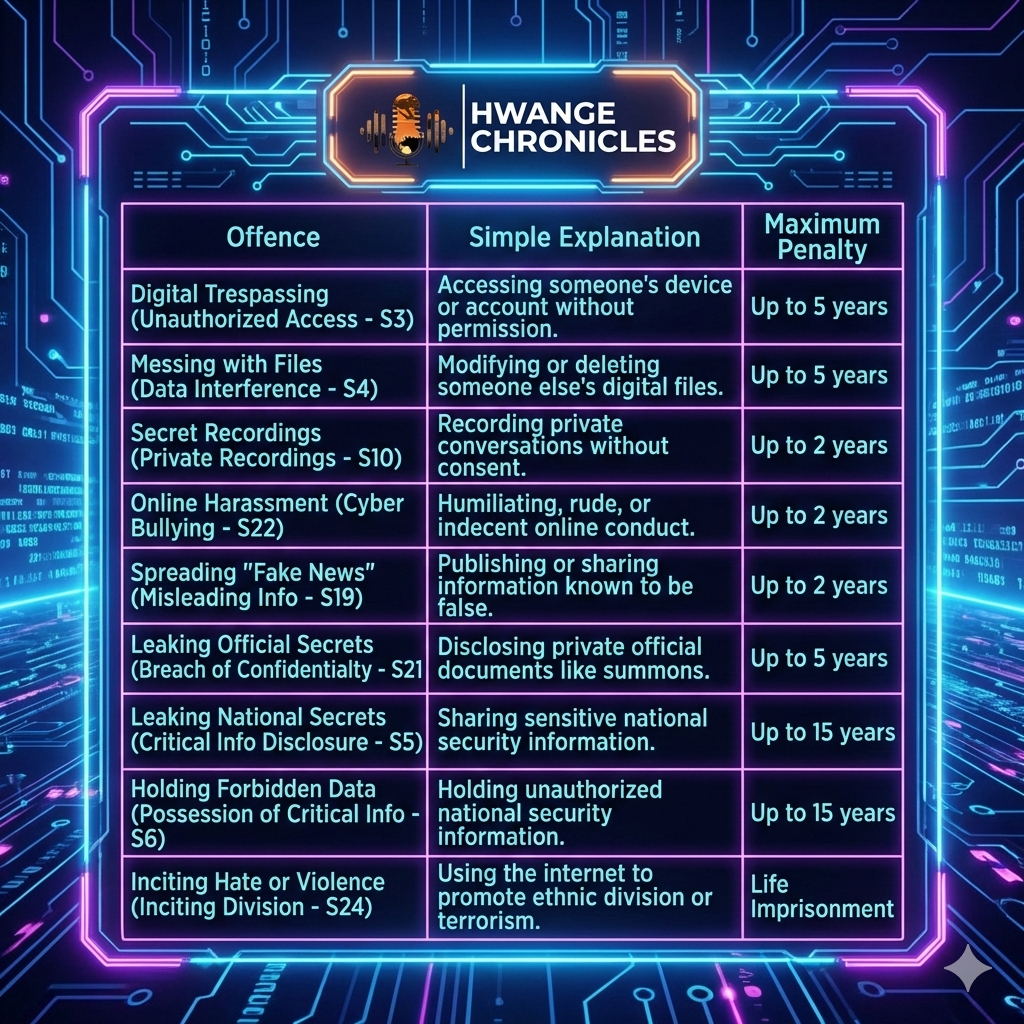
The penalties are no joke. This guide will walk you through 9 major cybercrimes that could land you behind bars, breaking down what they are, why they matter, and what consequences they carry.
——————————————————————————–
Part 1: Crimes Against Personal Privacy & Data
These offences focus on protecting your personal digital spaces, data, and private conversations from intrusion and harm.
1. Digital Trespassing (Unauthorized Access – S3)
Think of this as “breaking and entering” but for phones and accounts.
This is the act of accessing someone else’s phone, computer, or account without their permission.
Example: Peeking into a partner’s or friend’s private WhatsApp messages without them knowing. Penalty: Up to 5 years in prison.
Key Takeaway: This law protects your private digital spaces just like a lock on your front door protects your home.
2. Messing with Files (Data Interference – S4)
This involves modifying, deleting, damaging, or obstructing digital data that belongs to someone else.
Example: Deleting a colleague’s work files out of a grudge. Penalty: Up to 5 years in prison.
Key Takeaway: This law protects the integrity of your personal and professional information, ensuring it cannot be tampered with maliciously.
3. Secret Recordings (Private Recordings – S10)
This is the act of recording a private conversation, either audio or video, without consent from the other party.
Example: Secretly recording a phone call or meeting to use as leverage against someone later. Penalty: Up to 2 years in prison.
Key Takeaway: This law protects your right to have private conversations without the fear of them being secretly recorded.
4. Online Harassment (Cyber Bullying – S22)
This involves humiliating, rude, or indecent online conduct directed at another person.
Example: Using social media to publicly insult or shame someone. Penalty: Up to 2 years in prison.
Key Takeaway: This law ensures that online spaces are not used as platforms for personal attacks and harassment.
——————————————————————————–
Part 2: Crimes of Information & Misinformation
Beyond protecting individual privacy, the Act also governs the responsible sharing of information to prevent the spread of falsehoods and the unauthorized release of confidential material.
5. Spreading “Fake News” (Misleading Info – S19)
This crime is committed by publishing or sharing information known to be false or misleading.
Example: Forwarding a viral message about a fake health crisis or a non-existent government policy. Penalty: Up to 2 years in prison.
Key Takeaway: This law aims to protect the public from the harmful consequences of deliberate misinformation.
6. Leaking Official Secrets (Breach of Confidentiality – S21)
This involves disclosing official information like police call-outs or court summons that are intended to be private.
Example: Publicly posting a copy of a police call-out or a court summons you received or saw. Penalty: Up to 5 years in prison.
Key Takeaway: This law protects the integrity and privacy of official legal and police procedures.
——————————————————————————–
Part 3: High-Stakes National Security Crimes
Finally, the Act addresses the most severe offences—those that pose a direct threat to national security and public safety, carrying the heaviest penalties.
7. Leaking National Secrets (Critical Info Disclosure – S5)
This is the act of communicating critical government or infrastructure information to unauthorized persons.
Example: Sharing details about the security of a power plant or military operations with an unauthorized person. Penalty: Up to 15 years in prison.
Key Takeaway: This law carries a severe penalty because it protects the nation’s most sensitive information from falling into the wrong hands.
8. Holding Forbidden Data (Possession of Critical Info – S6)
This is simply possessing unauthorized critical data on a device, even if you are not the one who leaked it.
Example: Receiving and saving a classified government document in a WhatsApp group, even if you don’t share it further. Penalty: Up to 15 years in prison.
Key Takeaway: This law emphasizes that receiving and keeping this type of information is just as illegal as sharing it in the first place.
9. Inciting Hate or Violence (Inciting Division – S24)
This is the act of using the internet to incite ethnic division or domestic terrorism.
Example: Sending messages that encourage violence against a specific group of people. Penalty: Life Imprisonment.
Key Takeaway: This is the most serious cybercrime because it uses digital platforms to threaten public safety and national unity.